
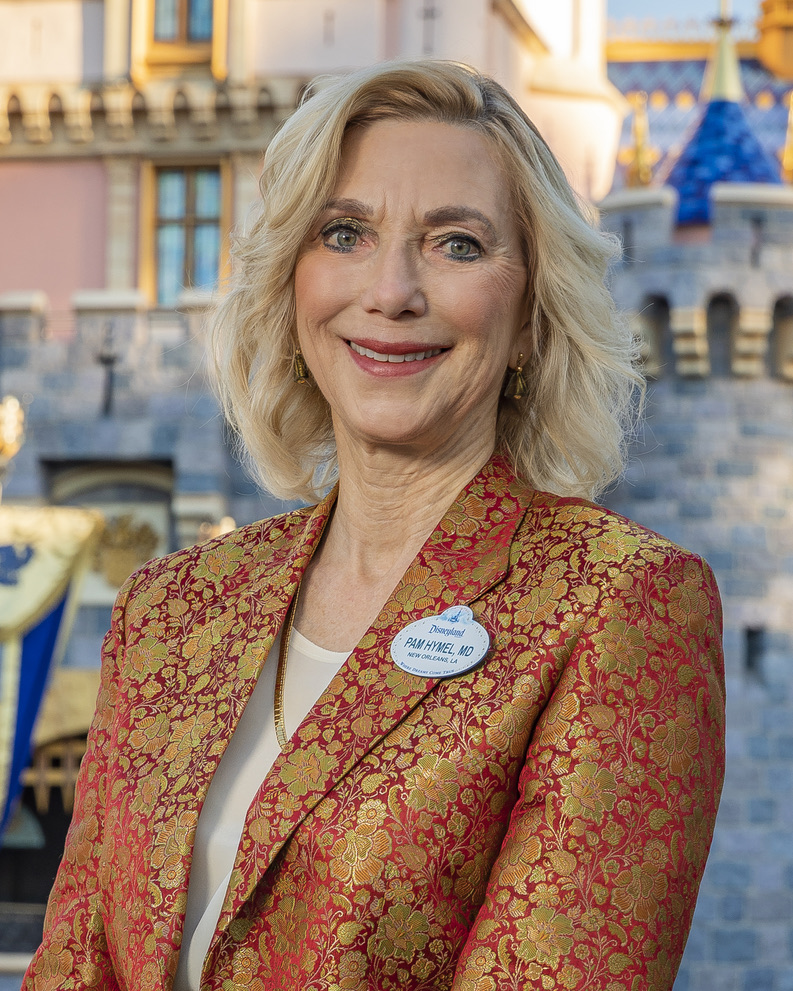
Pamela Hymel, MD, MPH, FACOEM, certified by ABPM in Occupational and Environmental Medicine, is the Chief Medical Officer for Disney Parks, Experiences, and Products. We talked about why new physicians should consider a career in OEM, what her day-to-day is like at Disney, and more!
What led you to a career in medicine and, specifically, in Occupational & Environmental Medicine?
My initial training was in Internal Medicine, but I found as I treated patients during residency that many had end-stage diseases that could have been prevented if they made lifestyle changes earlier in life. That led to my interest in Preventive Medicine. Additionally one of my mentors from college was a physician in the student health clinic and he transitioned to a job in Occupational Medicine. I became intrigued with the diversity of what he did in that role. So when looking for a path in Preventive Medicine, I chose to specialize in Occupational Medicine.
What circumstances led you to your current position as Chief Medical Officer for Disney Parks, Experiences and Products?
I’ve held multiple physician leadership roles including VP Health and Benefits at Hughes Electronics and Corporate Medical Director for Cisco Systems. When the opportunity at Disney arose, it was my dream job. I had worked at Disneyland as a waitress when I was in college and loved working there. What better way to round out a professional career than to do the job you love in a place you love to work.

What is your day-to-day practice like at Disney?
I am responsible for designing and running the health programs for our theme park cast members, first-aid programs for our guests, medical services for our cruise line and being part of the team that develops the strategy for overall wellbeing for over 150,000 Cast, Crew and Imagineers. Every day is different and interesting.
How has your training and experience as an OEM physician prepared you for your position at Disney, especially during the COVID pandemic?
Part of Occupational Medicine is learning to translate complex medical language into lay terms for leadership and employees. This was key during the pandemic. During the pandemic, corporate medical departments were viewed as integral parts of the business with employees looking to us for current, accurate scientific information. We often had to consolidate what the CDC, local/state health departments and medical experts were saying into implementable protocols for our businesses. Also, a big part of Occupational Medicine is learning how to be a team player and work with operations leaders – this turned out to be essential as businesses closed, reopened and instituted protocols for the health and safety of their employees.
What would you like other (non-OEM) physicians to know about Occupational & Environmental Medicine?
It is one of the areas of medicine with the highest satisfaction and happiness rating among its specialists. It certainly has provided me with a very rewarding career.

What advice would you give to a young physician considering a career in Occupational & Environmental Medicine?
If you want to go into corporate medicine, be willing to take that first job as a plant physician and learn the business. Take all the leadership classes you can and then be unafraid to take on new assignments. This will help you grow and build skills that prepare you for leadership positions in the future. Also take the time to network with your peers in professional organizations. That becomes key to having the ability to easily benchmark proposed practices and protocols.
Why did you choose to become board certified and what is the value of board certification for you?
I think it demonstrates my commitment to the field and my expertise. Getting the right training and then becoming board certified were key to my getting the positions in leadership at Fortune 100 companies.

What hobbies or other activities do you enjoy outside of work?
I love travel and wildlife photography. I have been to all seven continents and we are always traveling to some area of the world to take pictures of animals. I must say one of the benefits of my role is that I often must travel to various park or business locations so it does also allow me to satisfy some of that travel wanderlust.
Is there anything I didn’t ask about that you’d like the ABPM community to know about you or your work?
Much of my career has been focused on improving the overall health and well-being of the working population. In addition to the learnings from projects in companies I have worked for, I was able to both learn and give back through the many years I held leadership roles in either ACOEM (American College of Occupational and Environmental Medicine), WOEMA (Western Occupational and Environmental Medical Association) and NBGH (National Business Group on Health). I would like to encourage everyone to give back to our profession by being willing to participate in our professional organizations.