

Mr. Tom Granatir, ABPM’s Public Member, has substantial experience in health policy and a deep interest in physician certification. Beginning his term in August 2026, he has already proven himself a thoughtful contributor to board discussions.
In our interview, Mr. Granatir discussed his journey to a career with the American Board of Medical Specialties, his perspective as a non-physician on the value of board certification, and more.
Tell us about your career path and what led you to ABMS and your interest in board certification.
I feel like I need to go back to my beginnings to answer this question.
I didn’t realize that I was destined to work in health policy until I found myself in it. After finishing my undergraduate studies in philosophy and French literature, I worked in university publishing and taught guitar at the Chicago Conservatory. When I started musing about a graduate degree in political philosophy, my wife encouraged me to look for something more practical, so I entered a new program in public policy at the university.
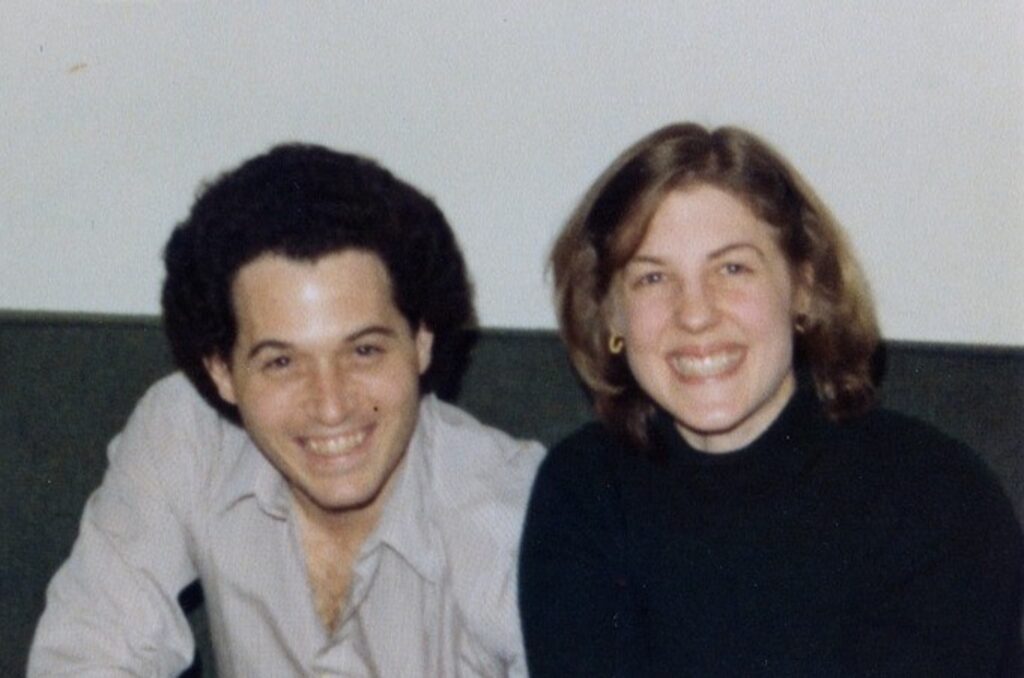
I thought it would be prudent to specialize in one area, and the university happened to be well-endowed with courses in health policy, so that’s where I focused my studies. But in retrospect, it seemed an obvious choice. As a teenager, my uncle, then a well-known public health physician at Yale, lived with my family in Washington DC to create the newly enacted Medicare program. So there was a lot of health policy talk around the dinner table during my formative years.
My career took me through a variety of sectors of the health system, including mental health, hospital, long-term care, health plan, and public health policy, but the unifying theme of all my work experience was my interest in the improvement of quality and safety.
Just prior to ABMS, I had been working for a large health plan doing public health work in England. I didn’t know much about certification, but I had worked for the Joint Commission, so I understood the parallel process of accreditation. At the time, ABMS was interested in enhancing recognition of specialty certification in the domestic quality movement. My goal was to find a place that was more aligned with my personal values.
I didn’t realize at the time, nor did ABMS and the boards, how much they were going to need my policy and advocacy experience. I joined ABMS in 2010, just before the beginning of the ferocious political backlash against Maintenance of Certification.
From your perspective as a non-physician, what is the value of board certification?
As a patient, it’s easy to see the importance of a system that validates specialty physician expertise. Health care is scary and dangerous, and we need to trust the competence and professionalism of our physicians.
As a policy analyst, I can see that certification plays a far larger role than people often recognize – even many who participate in and contribute to certification. By defining the contours of a discipline, and enumerating the knowledge, skills, and behaviors essential to expert practice in it, the boards set standards for the goals of training, Plus, by setting and enforcing standards for specialty expertise, the boards, along with the other institutions of the profession, serve a vital social role in maintaining trust in the profession as a whole. And as a national credential, certification is one of the few signals available about the quality of physician care.

What do you see as the unique value of having public members involved in physician certification and governance?
It’s important – or perhaps just occasionally useful – to have a voice representing the public interest at the table. The value of certification is determined not by producers of certification and not exclusively by participants in the process, but also by the users of the certification – patients, health systems, employers – and the public. I see my role as a public member as speaking up for these other stakeholders.
What has stood out to you most as you’ve learned about Preventive Medicine and ABPM?
The most striking thing about ABPM is how diverse the board is, and how different from the other specialty disciplines. It is hard to tell a simple story about what ABPM is about, and it is equally hard to apply all the conventions developed for the other disciplines to apply to Preventive Medicine.
What do you hope to accomplish during your term on ABPM’s Board of Directors?
I hope to encourage the board not to be constrained by the conventions of certification programs and to do some creative long-term thinking about what the future of certification should be for your disciplines.
Fortunately, I feel that ABMS may be more willing than they were in the past to let the board innovate to find a path that most meets the needs of your diverse disciplines and constituencies. At least I hope that’s the case.
What hobbies or other activities do you enjoy outside of work?
Reading, walking, biking, language study.
Is there anything else you’d like to share about yourself with the ABPM community?
The motto of my university is a Latin phrase that means, “Let knowledge grow, and let life be enriched.”
I’ve already found my time with ABPM to be very enriching.