
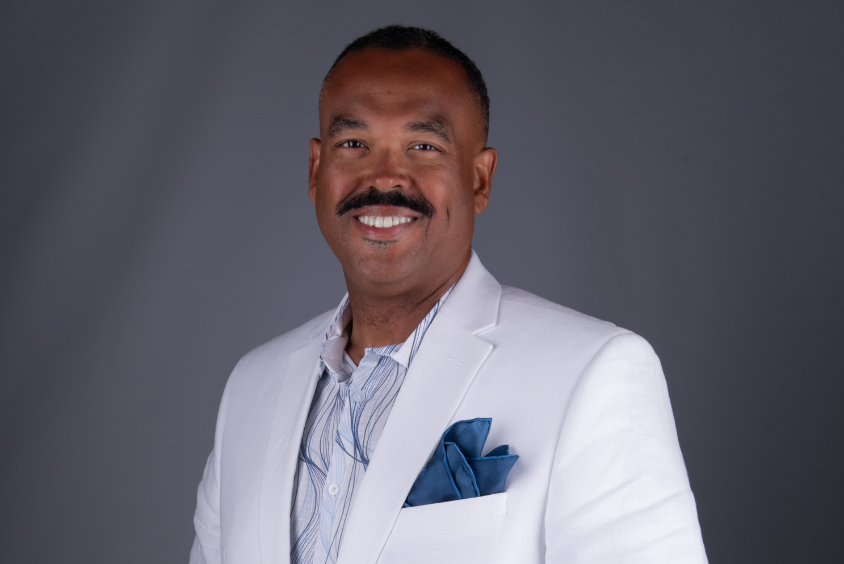
John Clarke, MD, MBA, MS, FACOEM, FAAFP, is the National Medical Director of Occupational Medicine for AstraZeneca and the Senior Medical Director for Premise Health, has served in several other senior medical leadership roles, and is an active ABPM diplomate certified in Occupational and Environmental Medicine (OEM).
Google his name, though, and you’ll find that his skills don’t stop there. Known as the “Rapping Doctor,” Dr. Clarke uses his musical and rhyming talents to inform kids – of all ages – about important health and safety topics, from diabetes, to train safety, to H1N1, using a genre he calls Health Hop®.
Dr. Clarke was kind enough to talk to us about his career, his current work as an OEM physician and his passion for health education through music.
Why did you choose a career in medicine?
My dad suggested medicine as a career for my brother and me and we both became doctors. This was because of his experiences where health care professionals did not always do the right thing or give him a good experience. He had hypertension, which spiraled into malignant hypertension, and ultimately kidney failure. I was about ten years old when this occurred, and it made an impression that fostered a passion for me to pursue medicine with a focus on disease prevention.
After practicing family medicine for several years, what led you to pursue the specialty of Occupational and Environmental Medicine (OEM)?
I was about six years into practice as a family physician when I first learned that OEM existed. I had never heard of the specialty. However, my wife is an NP and one of her colleagues took a job with a large Wall Street firm. This was interesting to me and as I learned more, I was drawn to the fact that there was a medical specialty that operated outside of the insurance billing system. At that point in my career as a family physician I was somewhat frustrated with the focus on volume of patients and rationing of services to generate profit versus quality time spent with patients and the potential compromising of care. OEM provided an opportunity to create and implement effective wellness strategies and provide quality illness and injury prevention services to large populations, especially since maintaining a healthy and productive workforce represents a financial incentive to organizations.
As the National Director of Occupational Medicine at AstraZeneca, what does your typical work day look like?
There is no “typical” day as there is a wide a variety of responsibilities. That is what excites me about the role. My responsibilities are not limited to OEM, as we also provide primary care services at some of the AstraZeneca locations. So, I also get to wear my Family Medicine hat as I am the clinical supervisor for NPs and PAs around the country.
On one day I may need to review and update an SOP [Standard Operating Procedure] or advise the leadership on a policy such as fitness for duty or ADA accommodations, etc. On other days I may need to provide guidance on a challenging workplace injury or disability case. There are times when I may need to travel to a manufacturing plant or research facility to conduct a site visit, or address a potential workplace exposure matter, or give an illness prevention talk on a topic such as diabetes to workers.
You’ve been called the “Rapping Doctor.” Can you tell us about how you got into Health Hop®?
I began writing rap songs at eight years old; I started composing tracks and making hip hop beats at about 13 years old. I majored in music and sociology at Columbia University and was offered a professional recording contract during my junior year. However, my passion to become a physician outweighed my desire to be a rap artist and producer. I pursued medicine and rap remained a hobby. During my family medicine residency, we were experiencing an asthma epidemic in New York City, where I trained. I knew that effective patient education was essential to achieving compliance among asthma patients. In the population we served, most asthmatic patients were teens, children, and young adults and many of the parents were young. Much of that demographic embraced Hip Hop culture and the American Academy of Pediatrics had recommended a culturally sensitive approach to asthma education. In addition, there is a science behind the effectiveness of rap songs in stimulating memory and learning (described below).
To reach the population, I wrote and produced a rap song, “Asthma Stuff,” and helped produce an educational video featuring a music video for “Asthma Stuff.” The results and feedback were excellent and demonstrated the effectiveness of using a rap song and video to teach. Health Hop® was born and I began producing songs on dozens of topics including asthma, teen pregnancy, HIV, STIs, violence, diabetes, metabolic syndrome, allergies, sickle cell disease, psoriasis, melanoma, smoking prevention, depression, etc.
The science behind Health Hop®:
The rationale for the approach was based upon several teaching and learning theories.
- Rhythm and rhymes are known to stimulate memory (i.e. mnemonics, jingles used in marketing)
- The Educational Theory, where learning is combined with an activity that the audience perceives as fun, cool and relatable (i.e. Barney Show, Sesame Street)
- The Musical Intelligence Theory, based upon the premise that music stimulates memory and learning (i.e. Alzheimer’s patients, Mozart Effect)
- The Multiple intelligences Theory, a form of multisensory learning, where we learn by seeing, moving, hearing, etc. (i.e. using slides during a presentation, music videos).
I’ve watched several of your rap videos and found them both fun and informative. What is your process to ensure they are engaging while focusing on the message?
Accuracy, authenticity, and artistic quality are the most essential elements. I keep on tune with what type of rap is popular at the time and the type of production the hip hop audience is gravitating towards. I created my first Health Hop song “Asthma Stuff” in 1997 so this has evolved over the years.
I begin the writing process by researching the medical topic and I base the content on the most current evidence-based information. I then write the lyrics. I either write lyrics that tell a story, or I present the information in a factual manner. For example, for topics like HIV prevention, violence prevention, pregnancy, alcohol and substance use prevention and diabetes prevention I wrote story-based raps. For other topics like asthma, COVID, and melanoma I wrote fact-based lyrics.
I then go to the studio and start composing and producing the tracks. I usually create five to ten beats and choose the one that best fits the flow of the lyrics and mood I am trying to create. For example, for story raps on topics like HIV and substance use I compose dramatic music and for fact-based songs I produce more up-tempo tracks. I seek feedback from others including teenagers to get a sense of what they and their friends like. I then record the vocals, produce, and mix the record.
For the videos, I create a story board and try to connect the location and setting to the topic and to connect the imagery to the song. I like to use multiple interesting locations to break up the monotony.
How and where have you shared them so that they reach the target audience?
Health Hop was created as a tool to complement health education initiatives. The intent is for information to be presented in a didactive form and for the rap songs to be used to reinforce the messages in a palatable way so that the audience will be engaged and remember the information.
Between 1998 and 2005, I produced a series of Health Hop CDs, and they were used as giveaways by pharmaceutical companies, sold at medical conferences, and sold to health departments and school nurses. The CDs were used to educate patients and students. (I have attached an article that describes a middle school program that incorporated the asthma CD.)
I also use Health Hop to complement presentations. Over the years I have been invited and featured as a speaker on topics that I have covered using Health Hop. I have delivered talks at numerous national and local medical conferences, grand rounds, health fairs, high schools, middle schools, and colleges. My technique is to give a didactic lecture and close with a live performance of the song(s) that are relevant to the talk.
This has been very well received by teens, adults and medical professionals where the audiences are educated and entertained. For many of the presentations to physicians, nurses, and other health professionals I focus on the effectiveness and science behind using rap songs to teach health information.
Do you have any advice for other physicians who want to harness their creativity to better reach their patients or the populations they serve?
I refer to the quote from Nike: “Just Do It.” Innovation, diversity of approaches and thought, and simply thinking outside the box is what leads to advancement in education and success in business. This is especially important to consider when addressing problems that exist that are either getting worse or not improving over time. This is an indication that the current approaches are not effectively addressing the problem. Do not be afraid to be different and harness your creativity and talent. You never know what might happen unless you try. I never imagined that rap would have been part of my medical practice until I imagined and employed rap as a solution to reaching the adolescent population. This is one of the toughest populations to reach. However, I have successfully connected with many high school and middle school audiences and have gotten feedback that Health Hop did make an impact.
What myths about OEM would you like to dispel?
I would like to dispel the myth that OEM clinicians are just “company docs” and somehow less impactful than those practicing in traditional roles. My opinion is shaped by my experiences as a family physician in comparison to my experience in OEM. OEM impacts more than health, safety, and wellness. We help people maintain employment which allows them to support their families and maintain benefits such as health coverage. We also impact the safety of the public and help the economy. We assist companies in maintaining a productive workforce, a safe workplace with fewer injuries, which can help reduce costs to consumers. The pandemic is a notable example where many organizations turned to OEM providers to remain viable and properly navigate the pathway for survival while others failed.
What advice do you have for those who are considering a career in OEM?
Make sure to have solid foundation with clinical experience.
Understand that in many OEM roles you do not necessarily generate income or profit for an organization, so it is important to be able to articulate and demonstrate ways you add value. The value OEM offers is largely through cost savings based upon injury and illness reduction and prevention, helping organizations comply with regulatory requirements such as OSHA, keeping the workforce productive, and advancing wellness initiatives.
Keep abreast with the impact of technology and AI on employers and the workforce and the resulting evolution of the role of the OEM provider.
What books are you reading? Do you have any you would recommend for other OEM or Preventive Medicine physicians?
My reading comprises of articles and peer-reviewed, web-based resources and content more than books. I use and recommend the ACOEM Guidelines, Official Disability Guidelines (ODG), NIOSH, StatPearls, and UpToDate. I typically read peer-reviewed journal articles that address the specific area of interest or question at hand that I am investigating. I recommend that OEM and Preventive Medicine physicians become proficient at analyzing articles to distinguish quality research vs weak data and questionable conclusions. This is especially important at a time when social media influencers and others can propagate misinformation that may be adapted as the truth despite a lack of evidence. This surfaced quite a bit during the pandemic and may continue to create greater challenges.
What is the importance of board certification to you?
I was practicing occupational medicine for about ten years before I pursued board certification. I was able to complete my occupational medicine residency training at the Harvard Chan Occupational and Environmental Medicine Residency Program through the Complementary Pathway program that allowed me to be prepared and qualified to take the board examination.
Board certification had the most significant impact on my expertise and marketability and consequently opened the door to a greater number of opportunities and higher levels of responsibility. Along with that came major boosts to the perception of my credibility, the perception of my expertise and respect in the field as well as an increase in earning potential. Investing time and resources to become board certified yielded a tremendous return on investment.
Is there anything I haven’t asked about that you’d like to share with the ABPM community?
I recommend we all take note of the NIOSH funding reductions and the impact on OEM training opportunities and the impact that this will have on the future. We should all explore ways to help preserve funding and support for NIOSH and the specialty of OEM if possible.