Thank you for reading this issue of the ABPM newsletter!
A lot has been going on at the ABPM in the past few months – here’s an update on just a few of ABPM’s recent activities.
First, in January, we welcomed nearly 900 physicians who passed the 2022 certification exams as the latest cohort of ABPM Diplomates. In addition, 233 current ABPM Diplomates completed the recertification process in January 2023. My fellow directors of ABPM’s Board and I are privileged to be part of a community of physicians who strive for excellence in Preventive Medicine and who demonstrate their commitment to high-quality care by achieving, and maintaining, board certification.
Secondly, you may have noticed that the ABPM website has undergone some changes. For the past several months, the ABPM has been working with ACGI Software to develop a new Physician Portal that will better meet the needs of both Diplomates and ABPM staff. The Physician Portal launched on March 15; it offers Diplomates a streamlined process to complete Continuing Certification Program (CCP) requirements, provides an easy-to-use application platform, and assists ABPM with its internal business processes. Learn more about the new Physician Portal, including how to log into your account, below.
Speaking of CCP, the first phase of the new program went into effect on January 1, 2023. Hopefully you’ve had a chance to review the new requirements, which were designed based on Diplomate feedback. If not, be sure to check them out on the ABPM website.
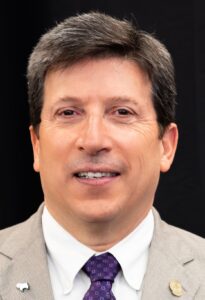
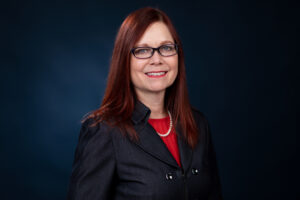
And finally, the Board held its annual meeting at the end of January. We discussed many important topics, including CCP, longitudinal assessment, and many other Board programs and initiatives. Importantly, we appointed two new Directors to the Board, Drs. David Miller and Paul “PJ” Jung, representing Aerospace Medicine and Public Health and General Preventive Medicine, respectively. They will join us at our August 2023 meeting as observers and begin their terms immediately upon the conclusion of the meeting. We’re excited to gain their expertise and perspective on the Board!
I’ve described just a sample of what’s happening at the Board right now; for a fuller picture, continue reading!
All the best, Wendy E. Braund, MD, MPH, MSEd, FACPM
On behalf of the Board and the staff of ABPM, I wish you and yours health and happiness for this new year!
This year is especially significant for ABPM, as it marks our 75th anniversary. Since 1948, ABPM has been proud to support the highest standards in certification in the specialties and subspecialties of Preventive Medicine, and we are looking forward to promoting those standards for another 75 years and beyond. We’ll share more about our 75th anniversary in the coming year, including an updated history of ABPM and interviews with notable people from ABPM’s past.
This issue of the newsletter is dedicated to the launch of ABPM’s new Continuing Certification Program (CCP), another major 2023 event. Read on to learn what to expect this year and in the years to come, what you’ll need to do to stay current, and to get answers to your questions. The Board and staff have developed the plan for CCP with our Diplomates in mind – taking to heart your feedback. Each member of the Board of Directors must also comply with all CCP requirements – including all fees – and we understand deeply the need for a program that is both relevant and convenient for our Diplomates while remaining compliant with ABMS Standards.
With the launch of CCP, the ABPM says goodbye to the traditional MOC exam. We’re offering the final MOC exam this month via an online, remotely proctored platform. As many of you know, we’ve been piloting a longitudinal assessment program (LAP) with our Clinical Informatics diplomates since 2021, and we are looking forward to expanding the LAP to all specialties and subspecialties. The LAP item-writing subcommittees formed last year will meet this year and will begin developing questions for the longitudinal assessment. Are you interested in writing questions for the LAP? Send ABPM a message.
Finally, the Board is looking forward to meeting at the end of this month. We’ll be discussing the continued development of CCP among other important initiatives. We’ll provide a report in the next newsletter.
Thank you for reading this newsletter and again, best wishes for 2023!
Thank you once again for opening and reading this issue of ABPM’s Newsletter! Over the more than three years we’ve produced this quarterly newsletter, we’ve been happy to see your positive response and engagement! If there is something specific you would like to see in future issues of this newsletter, we’d love to hear from you – contact us.
In this issue, I’m pleased to share a look at what the Board of Directors has been up to.
First and foremost, on behalf of ABPM’s Board of Directors, I wish all the best to over 1,100 candidates who will be taking the initial certification exams this month and offer congratulations on reaching an important milestone in your journey to become board-certified Preventive Medicine specialists!
The Board of Directors met in August 2022, the first time since January 2020 that we all have been together in person. We had a great time in Chicago and we got a lot of work done. You can learn more about the specifics of what we discussed and accomplished later in this issue. I’m excited to report we’ll be rolling out some important initiatives in the next several years, including a new Continuing Certification Program, longitudinal assessment for all ABPM specialties and subspecialties, and efforts to increase the diversity of our Board and specialty – all while remaining committed to the highest standards in certification, recertification, and assessment. I’d like to personally thank my colleagues on the Board for their dedication to the good not only of the Board itself but also of the specialty and to the Diplomates, Candidates, and Applicants whom they represent.
At the August meeting, we welcomed two new members – Karen Studer, MD, MBA, MPH, FACPM, who will represent Public Health and General Preventive Medicine as a Director on the Board; and Jeffrey Hoffman, MD, FAMIA, serving as the Clinical Informatics Sub-Board Chair. Dr. Studer and Dr. Hoffman began their terms immediately upon the conclusion of the Board of Directors meeting on August 13, 2022.
This fall, the Board will be interviewing several candidates for both an Aerospace Medicine Director position and a Public Health and General Preventive Medicine Director position. These interviewees were selected from a slate of outstanding nominees, and we’re looking forward to meeting with and learning more about each of them!
As you can see, ours really is a “working board,” and we have lots of work ahead of us! It is our privilege to be in a position to serve the Preventive Medicine community and to advance the specialty we love.
Once again, thanks for taking the time to read this letter and this issue of our newsletter! We wish you a safe, healthy, and happy fall!
This month, we are proud to highlight Dr. Olapeju Simoyan in our Diplomate Spotlight!
Dr. Olapeju Simoyan, an Addiction Medicine specialist and member of ABPM’s Addiction Medicine Sub-Board, is the Executive Director of Research at Caron Treatment Centers. She has keen interests in music and writing and, in June 2022, was awarded the National Humanism in Medicine Medal by the Arnold P. Gold Foundation for her efforts to incorporate the arts into medical education.
She graciously took the time to answer our questions about how she connects the arts and medicine, her journey to an impactful career, and much more.
Why did you choose a career in medicine, and, specifically, Addiction Medicine? What was your career path?
I graduated from high school at the age of fifteen, and six years later, I was a 21- year- old dentist. At the time, I knew I had a lot of divergent interests, and I didn’t think a career in medicine would allow me to pursue them all. I eventually obtained a Master of Public Health degree from Johns Hopkins University, thinking I might end up working for an international health organization. The international health job didn’t materialize, but the opportunity for further training did, so I completed a dental public health residency at Montefiore Medical Center and eventually got board certified in dental public health. By that time, I had decided that I needed a medical degree to make the kind of impact I wanted to make. So, in April of 2002, I passed my dental public health board exam and in August of the same year, I enrolled in medical school at Penn State College of Medicine.
I was interested in psychiatry, but also wanted to be able to continue to practice some general medicine, and I felt addiction medicine was the right fit – with the right amount of both.
Having developed your talents in music and writing, and as a founding editor Black Diamonds and an editor at Pulse – Voices from the Heart of Medicine, you have been able not only to pursue your artistic passions, but also to integrate your artistic interests in your medical profession. What is the connection between art, music, and medicine, and how do those connections inform your practice of Addiction Medicine?
My formal editorial roles started as a medical student at Penn State College of Medicine, where there was a strong emphasis on the humanities. As a fourth- year medical student, I served as editor for Wild Onions, an arts and literary journal. At the time, I thought it was just a fun thing to do and had no idea that it was laying the foundation for what would become a significant part of my career. I started a similar initiative at what is now Geisinger Commonwealth School of Medicine. The students chose the name Black Diamonds in honor of the region’s coal mining history, and I served as Editor in Chief from the inception till 2020 when I moved to take on my current position. I am currently a member of the medical humanities committee at Reading Hospital/Tower Health and was asked to serve as Founding Editor for a new arts and literary journal, Silver Linings.
For a long time, I struggled to find ways of incorporating my artistic passions into my work. I supported the medical students in their artistic endeavors by participating in talent shows and serving as faculty advisor for the arts and music interest group but struggled to find ways of incorporating music and the arts into my professional work. More recently, I have been able to include music in the group sessions I have with teenagers and young adults who are in treatment for substance use disorders at our inpatient facility. I take my ukulele to the sessions and after discussions about the developing brain/drugs and/or research, I invite anyone who is willing to play the ukulele or guitar. At times I play a familiar song and accompany myself on the ukulele. It is refreshing to see their faces light up during the sessions.
I strongly believe that art and music should play a stronger role in education. In addition to the therapeutic effect of music, musical training can help make us better listeners, a skill which can improve the quality of our interactions with patients. Observational skills developed through training in the arts can also improve our ability to notice subtle changes while performing physical exams that could lead to making a diagnosis that might otherwise be missed.
The increase in substance use disorder during the COVID-19 pandemic has been well-documented. How has the pandemic changed the practice of Addiction Medicine? Are there changes that you see as long-lasting effects on the subspecialty?
One significant change is the increased use of telemedicine and if this helps to reduce barriers to treatment, then perhaps it’s one positive consequence of the pandemic.
What would you like other (non-Addiction Medicine) physicians to know about Addiction Medicine?
Addiction medicine is a specialty that anyone from any other specialty is welcome to. Many of our trainees come to our fellowship programs after having long careers in other specialties, while others come straight out of residency training. There is such a need for specialists in this field, and the multidisciplinary nature of the field is a great asset.
What advice would you give to a young physician considering a career in Addiction Medicine?
It is a very rewarding career and can be practiced in various settings, which allows for flexibility.
Some physicians choose to combine addiction medicine with their primary specialty while others chose to focus on addiction. There are opportunities in academia, research and industry. I don’t think too many other specialties offer the same level of flexibility.
Why did you choose to become certified and what is the value of board certification for you?
I initially got certified by the American Board of Addiction Medicine in 2014. At the time I had the impression that we would be “grandfathered” when the ABPM certification became available. You can imagine my frustration when, in 2015, it was announced that ABPM certification was available and that all diplomates – except those certified in 2015 – would have to take the new exam! That notwithstanding, I took the ABPM exam as soon as it was available (2017), because I knew it was important for my academic career (I became a program director for an addiction medicine fellowship shortly after).
Is there anything else you’d like to share with ABPM Diplomates about yourself?
I like to tell people to stop trying to be “normal.” Instead of wondering why I am “different,” I have learned to embrace the characteristics that make me the unique person that I am. I can’t save the world, but I can make the greatest impact by doing those things I am uniquely equipped to do. I encourage others to do the same.
Would you like to be featured in ABPM’s Diplomate Spotlight? Send an email to [email protected] and let us know your story!
Dr. Yair Saperstein is a dual-board-certified internal medicine and clinical informatics physician who is the founder and CEO of AvoMD (www.avomd.com). He is a member of Alpha Omega Alpha (AOA), and graduated from Albert Einstein College of Medicine with distinction in research in global health, from SUNY Downstate with a Master’s in Public Health, and from Yeshiva College as Valedictorian. He continues his clinical work at Mount Sinai Beth Israel.
Previously, Dr. Saperstein co-founded two non-profit education-based organizations, StartScience.org and Teach4Kids.org, and served as both inpatient medicine Chief Resident and Informatics Liaison at Kings County Hospital. He has contributed to Epic implementations in two hospital systems.
Yair is an acclaimed classical concert pianist and recreational ukelele jammer and has won numerous awards including the Jewish Week’s “36 under 36” most influential Jewish Americans, semifinalist in Dell’s Social Innovation Challenge, 1st place “most promising software” at Microsoft’s UIST, and most recently second place in the Lyfebulb-Loyola University Chicago Innovation Challenge (2021) and the American College of Cardiology People’s Choice award for AvoMD (2022).
Why did you get into medicine and how did you become interested in Clinical Informatics?
I have long dreamt of contributing to the practice of medicine through technology. As a child of two physicians, if I wasn’t playing “doctor,” or playing games on the computer, I was thinking about how the two might intertwine.
Throughout high school and college, I focused on the sciences. I majored in Chemistry, and competed in numerous science fairs and competitions. I credit the fostering environment of both my family and school life for promoting my blossoming interest in the practical application of the sciences. (Accidentally blowing up science experiments at home just made it more exciting…)
In medical school, I focused on teaching and empowering others as I myself learned. I helped grow two education-focused clubs into internationally operating non-profit organizations (START Science, and TEACH). I also did extensive global health work, working in 14 countries during my time in medical school. In Internal Medicine Residency at SUNY Downstate, I continued to look for opportunities to make a positive change, starting our first Internal Medicine Residency newsletter for the residents to have a voice, and founding our Wellness Committee. My advisor, Dr. Isabel McFarlane, suggested that I look into the field of Clinical Informatics, a subspecialty in medicine that combines IT and medicine.
What is your background and what has been your career path in Clinical Informatics?
After looking more into Clinical Informatics, I realized its potential for having a broad positive impact. I took an elective at Columbia University’s Department of Biomedical Informatics and met the faculty, including one fellow, Joongheum Park (PJ), who later became my cofounder in starting a clinical decision support (CDS) company. He told me over dinner how he was building a tool to help doctors make better decisions — specifically, shareable, modular CDS. I got to work on learning how to build a decision pathway and successfully built one for Diabetic Ketoacidosis, a crisis of diabetes. In the meantime, I served as the informatics liaison at Kings County Hospital and helped with implement a two-way communication system, and transition my hospital system from Quadramed to Epic.
In 2018, PJ, Laurence Coman and I founded our modular, shareable CDS company, AvoMD, Inc. and I have been its CEO since that time.
What advice would you give medical students, residents, or others considering Clinical Informatics as a career?
Look for opportunities, and when they come, grab them.
Learn from everyone.
There are many careers outside of clinical medicine that allow you to have a broad, creative, positive impact. Explore them!
Why did you choose to become certified and what is the value of board certification for you?
I wanted to be well-versed in all aspects of Clinical Informatics, which led me to study its breadth. As well, as part of my role as CEO of AvoMD, I speak to many CMIOs, and I wanted to be able to speak the same language – that of clinical informatics. Getting certified allowed me to formalize this learning.
Karen R. Studer, MD, MBA, MPH, FACPM, was elected to ABPM’s Board of Directors at its January 2022 meeting. She will represent the specialty of Public Health and General Preventive Medicine.
Dr. Studer is the Program Director for the Preventive Medicine Residency and an Assistant Professor at the Schools of Public Health and Medicine at Loma Linda University in California. She is also an attending physician at SAC Health, a Federally Qualified Health Center where she began a women’s lifestyle medicine clinic. Dr. Studer has served on the Public Health and General Preventive Medicine exam item-writing subcommittee since 2016.
Dr. Studer graciously answered a few of our questions to help us get to know her a little better!
Why did you get into medicine and how did you come to choose the specialty of Public Health and General Preventive Medicine?
Dr. Studer with her nephew
Health and wellness has always interested me and I thought about attending medical school while in college — until I took physics. Then I promptly dropped physics and decided to become a junior high school teacher. Although I still enjoyed teaching, I felt a stronger calling towards health. I then researched more into the field of public health and decided to obtain my MPH in health education and promotion. As I was looking at public health job opportunities, I came across the position of public health officer, and thought that it would be a great fit; but, I needed an MD. I re-enrolled in physics with a growth mindset and was accepted into medical school. I was lucky enough to read about the specialty of Public Health and General Preventive Medicine as a first-year medical student. I read about Dr. Dysinger and his amazing career and reached out to his son, Dr. Wayne Dysinger, who was the Chair of Preventive Medicine at my school, Loma Linda University Health. He introduced me to the American College of Preventive Medicine and their national conference. I saw many others with the combination of degrees “MD, MPH” and knew I had found my people! Although I did not become a health officer, I am honored to work with our local health officers and train future health officers as a program director. I continue to teach medical students and residents and love to spread the word about our unique specialty.
What do you think the value of board certification is?
Board certification ensures the integrity of the field to certify that a physician has the fundamental knowledge that our field agrees we should possess. It is the cornerstone of any specialty.
Dr. Studer’s residents at their retreat on Catalina Island
What do you hope to accomplish during your time on the ABPM’s Board of Directors?
I am looking forward to assisting in the goals and mission of the Board. In addition, I hope to increase the recognition of our specialty in medical schools and to the public. Medical students represent the future of preventive medicine, and all medical students should be aware that it is an option to pursue as a residency. Too often, medical students and residents in other specialties learn about our field after they have started on a different path.
What do you enjoy doing in your spare time?
I have a lot of different hobbies and interests, but I am very diligent about scheduling in a
Two of Dr. Studer’s three pets
work out 4-5 times per week, even when traveling. I also love spending time with my 7-year-old nephew, nature, traveling and photography. I have two rescue cats and an Italian greyhound and listen to over 40 audiobooks per year.
Any other information you’d like to share about yourself with ABPM Diplomates?
It’s such an honor to be chosen to serve on the Board and I’m grateful to my mentors and colleagues for their support. I am looking forward to learning more from the other Board members and to serve our Diplomates. I am also especially grateful to have trained and currently work at Loma Linda University Health, an institution that is dedicated to prevention and lifestyle medicine and who supports the field by having a department, a medical school presence in all four years, and a funded residency program.
Jeffrey M. Hoffman, MD, FAMIA was elected as ABPM’s Clinical Informatics Sub-Board Chair at the January 2022 meeting of the Board of Directors. He will begin his term in August 2022.
Dr. Hoffman is the Chief Medical Information Officer at Nationwide Children’s Hospital in Columbus, Ohio, and a Clinical Associate Professor of Pediatrics and Division Chief of Clinical Informatics at the Ohio State University College of Medicine. Dr. Hoffman has also served on the Item-Writing Subcommittee for the ABPM’s Clinical Informatics Longitudinal Assessment Program (LAP) Pilot. Notably, Dr. Hoffman was a member of the first cohort of physicians to become board certified by ABPM in Clinical Informatics in 2014. He also developed one of the first ACGME-accredited Clinical Informatics fellowships where he currently serves as Program Director.
Dr. Hoffman was kind enough to answer a few questions to help us learn more about him.
Why did you get into medicine and how did you come to choose the subspecialty of Clinical Informatics?
As a young child, I was fascinated by how the human body worked and read every book I could find in my local library, at least those that I could understand. My interest in medicine grew over the years, along with a few unexpected hospitalizations. By late high school, I had decided to become a physician, which later turned into a love of pediatrics and ultimately pediatric emergency medicine. As a PEM physician, I quickly learned the value of having accurate and timely information about my patients… something often in short supply given the how everything was on paper back then. So, when my hospital decided to implement an enterprise-wide EHR, I was one of the first to raise my hand to volunteer.
Parallel with my journey into healthcare, my interest in computers also began at an early age. My teenage years coincided with the initial heyday of personal computers, and just like with medicine, I went about learning all I could about this amazing device and what it was capable of. Though I have no formal training in computer science or coding, I quickly learned how to program and became an advocate for the use of computers during medical school, residency, and fellowship. Little did I know at the time that these two intellectual passions – medicine and computers – would blend together into a new specialty.
What do you think the value of board certification is?
As physicians, we are always being measured and validated. Whether it be by quality measures, academic promotions, online ratings, “best doctor” recognition, or a bevy of positive patient comments, these accolades are often seen as a testament to our clinical and academic acumen. However, the gold standard still remains board certification, which signifies to our professional colleagues, co-workers, and hospital administrators that we possess the same degree of knowledge, skill, and experience in the domains of clinical informatics as do other physicians in their specialties. And as digital tools and digital experience transform the delivery of healthcare in the coming years, board-certified physician informaticists are uniquely suited to best leverage technology to serve not only patients, but also our fellow physicians who are tasked with providing that care safely and efficiently.
What do you hope to accomplish during your time as the ABPM’s Clinical Informatics Sub-Board Chair?
Clinical informatics is a young specialty and has already experienced its share of growing pains. Under the thoughtful and dedicated leadership of our two previous CI Sub-board chairs, CI diplomates now represent the largest group of diplomates within ABPM. As CI Sub-board Chair, I want to continue evolving both the initial certification exam and the longitudinal assessment program to best fit the breadth and ever-changing practice environment of our specialty, to facilitate the growth and expansion of clinical informatics fellowship programs around the country, and to partner even more closely with AMIA to help support the educational needs of our CI trainees and diplomates.
What do you enjoy doing in your spare time?
My first reaction to this question is… what spare time? But seriously… this year, my wife and I will celebrate our 25th wedding anniversary. We have two adult children (one of them finishing her freshman year in college) and a son still in high school. Balancing a busy home life with the demands of being CMIO and CI division chief at a large children’s hospital is not easy, but if these past two years have taught us anything, it is that work-life balance is essential in combating fatigue and burnout.
As you might imagine from learning of my journey into medicine and informatics, I am a voracious learner. I read occasionally (mostly non-fiction) and watch my fair share of educational YouTube videos. I enjoy watching football (college more than pro) and attend most home Buckeye games as many Columbus area residents are prone to do. I also enjoy classic music… and by “classic”, I mean pop and rock from the 70’s and 80’s. My son keeps trying to introduce me to rap and hip-hop, but I have yet to learn to appreciate those genres… much to his disappointment. All that – plus a dog, a cat, and my daughter’s bearded dragon that we are babysitting while she is at college – keeps me plenty busy.
Any other information you’d like to share about yourself with ABPM Diplomates?
Thirty years ago, I started my pediatric emergency medicine fellowship in Kansas City. At the time, there were less than a dozen programs, and after graduation, I was in the second cohort to take the PEM board certification exam. PEM was a relatively new field, and much of the discussion today about the value of physician informaticists and CI board certification remind me of similar conversations back then when board-certified PEM physicians were trying to prove their value and find their place. Once again, I find myself at the dawn of a new medical specialty trying to find its own place and future. I am excited at the opportunity the ABPM Board has given me to help guide clinical informatics in that journey in the years ahead.
As the seasons change and the weather warms, things are changing at ABPM, too! Keep reading for a glimpse of the exciting updates at ABPM.
The Board of Directors will be meeting in Chicago in August, where a major topic of conversation will be ABPM’s plan for continuing certification. As I’m sure many of you know, the American Board of Medical Specialties (ABMS) released its updated standards for continuing certification in October 2021. All ABMS member boards, including the ABPM, are obligated to develop continuing certification programs that comply with these new standards.
Both the Board and the Staff of ABPM have been hard at work debating and drafting ABPM’s new program, but now we need you to do your part! Please keep an eye out in your email inbox for an invitation to review our draft program and provide your opinion! Your thoughtful responses to this survey will be carefully considered by the Board in August as it finalizes its proposal for continuing certification, which then will be presented to ABMS for its approval later this year.
Speaking of the Board of Directors meeting, we will be welcoming two new members who will attend as guests at the August meeting and will officially become members immediately following the meeting. Learn more later in this issue about both Dr. Karen Studer, our incoming Public Health and General Preventive Medicine Director, and Dr. Jeffrey Hoffman, our incoming Clinical Informatics Sub-Board Chair. We are very happy to have them as part of the Board and we look forward to their fresh perspectives!
As we welcome Drs. Studer and Hoffman, we also offer our deep gratitude to Dr. Carolyn Murray and Dr. Adi Gundlapalli, whose terms are ending in August. Dr. Murray has served on the Board as a representative of Public Health and General Preventive Medicine since August of 2013. During her tenure, Dr. Murray has represented her specialty on the Board with grace and thoughtfulness, and ensured that the perspectives of practicing physicians, residents, and patients were always taken into account in Board discussions.
Dr. Gundlapalli first came on as our interim Clinical Informatics Sub-Board Chair in 2018 and went on to be selected as the Sub-Board Chair in 2019. During his tenure, Dr. Gundlapalli oversaw ABPM’s first foray into longitudinal assessment with the Clinical Informatics Longitudinal Assessment Program (LAP) Pilot.
Thank you to Dr. Murray and Dr. Gundlapalli for their leadership!
Do you know anyone (including yourself) who has the leadership qualities to sit on the ABPM’s Board of Directors? We are currently seeking nominations for an Aerospace Medicine representative and a Public Health and General Preventive Medicine representative. Learn more about the positions and the qualifications here. The submission deadline for nominations is July 31, 2022.
Thank you for reading this issue of ABPM’s newsletter – we hope you enjoy!
All the Best, Wendy E. Braund, MD, MPH, MSEd, FACPM
Thank you for reading this issue of ABPM’s newsletter!
The first quarter of 2022 has been an exciting time at ABPM – we have a lot of great news to share with you!
First of all, I’d like to extend my hearty congratulations to ABPM’s newest Diplomates and current ABPM Diplomates who recently recertified! We celebrate your dedication to excellence and your commitment to continuously improving your skills and improving outcomes for the populations you serve. Well done!
Two accomplished individuals from the ABPM community, Karen R. Studer, MD, MBA, MPH, FACPM, and Jeffrey Hoffman, MD, FAMIA, will be joining the Board later this year. At the Board’s Annual Meeting in January 2022, we selected Dr. Studer to fill the Director position representing Public Health and General Preventive Medicine that will be vacant when Dr. Carolyn Murray completes her final term on the Board in August 2022, and we elected Dr. Hoffman to take the reins of the Clinical Informatics Sub-board after Dr. Adi Gundlapalli completes his final term in August 2022.
In March, we were very pleased to announce that the American Board of Medical Specialties (ABMS) approved a second extension to the Practice Pathway for Clinical Informatics. This is a fantastic development that will not only provide experienced and well-qualified physicians with a few more years to apply for the Clinical Informatics certification exam, but also will allow more time to grow the number of ACGME-accredited fellowships and ensure the continued sustainability of the Clinical Informatics Subspecialty. Details are reported later on in this issue.
In this issue we also report on a milestone in ABPM’s efforts to raise awareness of Preventive Medicine Specialties! In February, ACGME tentatively approved ABPM’s request to list each of the three ABPM Specialties (Aerospace Medicine, Occupational and Environmental Medicine, and Public Health and General Preventive Medicine) separately on its website. All three Specialties will remain under one common Review Committee. ACGME will post the updated program requirements on its website for a period of public review and comment, after which the program requirements will be submitted to the ACGME Board of Directors for its final review in June 2022.
While a seemingly small change, this will provide greater visibility for the individual Specialties. Coupled with Medscape’s recently published 2022 Physician Burnout & Depression Report which found that Preventive Medicine physicians reported the lowest rates of burnout and depression, ABPM is well-positioned to advocate for the attractive career options Preventive Medicine can provide, and we’ll continue spreading that message!
As you may know, ABPM is moving forward in its transition from MOC to a new Continuing Certification Program (CCP) and as part of that transition, we’ve been piloting a longitudinal assessment program (LAP) with our Clinical Informatics Diplomates. We just finished the first year of the LAP Pilot and we’re pleased to report that nearly 85% of the questions were rated “very” or “somewhat” relevant by participants. We’re encouraged to have a strong foundation of relevant content upon which to build the final LAP and we’re looking forward to sharing details of the CCP with all of you as they become available.
These strides forward make us confident about the future of not only ABPM but also Preventive Medicine. Thanks for taking the time to read this issue; it’s packed with updates and great news we’re happy to share with you. If you have any questions or comments for us, don’t hesitate to reach out. We read and respond to every message and we look forward to hearing from you!
Happy New Year from the Board and Staff of ABPM! We wish all of you the very best for 2022, especially good health and happiness.
We’re excited to begin the new year with a couple of items of good news!
First, the American Board of Medical Specialties (ABMS) officially approved a new set of Standards for Continuing Certification. ABPM, along with the other 23 ABMS member boards, is required to implement the new standards in its Continuing Certification Program over the next few years. You can find the new standards for Continuing Certification here. ABPM’s goal is to offer a meaningful program that recognizes Diplomates for their dedication to lifelong learning and quality improvement and provides a credential in which the public and other stakeholders can be confident. We will keep you informed on developments to ABPM’s Continuing Certification Program as they are available – be sure to read future newsletters and follow ABPM on LinkedIn for updates on this, and many other important topics.
Secondly, the ABPM recently announced that it will merge the Core Preventive Medicine exam content into each of the three Specialty certification exams, beginning in 2022. This means that Candidates will only need to schedule and sit for a single Specialty exam, rather than the two separate exams that were previously required. This change is designed to provide a more convenient and flexible exam experience while ensuring that physicians who are Certified in Aerospace Medicine, Occupational & Environmental Medicine or Public Health & General Preventive Medicine have a well-rounded knowledge of Preventive Medicine principles. Read more on this later in this issue.
Lastly, and most importantly, we’d like to recognize ABPM Diplomates after another year of hard work and dedication to the Specialties and Subspecialties of Preventive Medicine. We salute physicians who are continuing the battle against the ongoing pandemic and its wider effects, who are researching ways to make healthcare better for everyone, and who are serving their communities every day.
Tell us what you or your colleagues are up to – we’d love to hear how you are serving your community and to highlight you in a future issue of this newsletter. Send us your news and achievements at [email protected].
Once again, best wishes for a new year of health and happiness!